Pet Dentistry

At Erin Mills Pet Hospital, we are a full-service general practice providing comprehensive dental care to support your pet’s oral and overall health. Regular dental exams and cleanings play a key role in preventing dental disease and keeping your pet comfortable. Imagine what your mouth would feel like if you never brushed your teeth or went to the dentist. For many dogs and cats, this is a painful reality. According to the American Veterinary Dental Society, more than 80% of dogs and 70% of cats have dental disease by the age of 3. Dental (or periodontal) disease is the most frequently diagnosed health problem in pets.

Pet Dentistry in Mississauga, ON

We offer complete dental services in-house, including dental cleanings under anesthesia, full mouth dental radiographs, and a range of dental procedures. While teeth may appear healthy on the surface, dental X-rays allow us to assess what’s happening below the gumline, which is critical for accurately evaluating your pet’s dental health, similar to human dentistry.

Our dental services include:
-Professional dental cleanings under anesthesia
-Full mouth dental radiographs
-Dental extractions
-Treatment of dental disease and infections

If more advanced or specialized care is needed, we can refer your pet to a board-certified veterinary dentist.

Understanding Dental Disease in Pets

Dental (periodontal) disease is one of the most common health conditions in pets. By the age of three, most dogs and cats show signs of dental disease. Without proper care, this can lead to pain, infection, and difficulty eating.

Common signs include:
-Tartar buildup on teeth
-Red, swollen, or bleeding gums
-Bad breath
-Drooling
-Changes in eating or chewing habits
-Pawing at the face
-Loose teeth

Even if your pet isn’t showing obvious symptoms, regular dental evaluations are important for early detection.
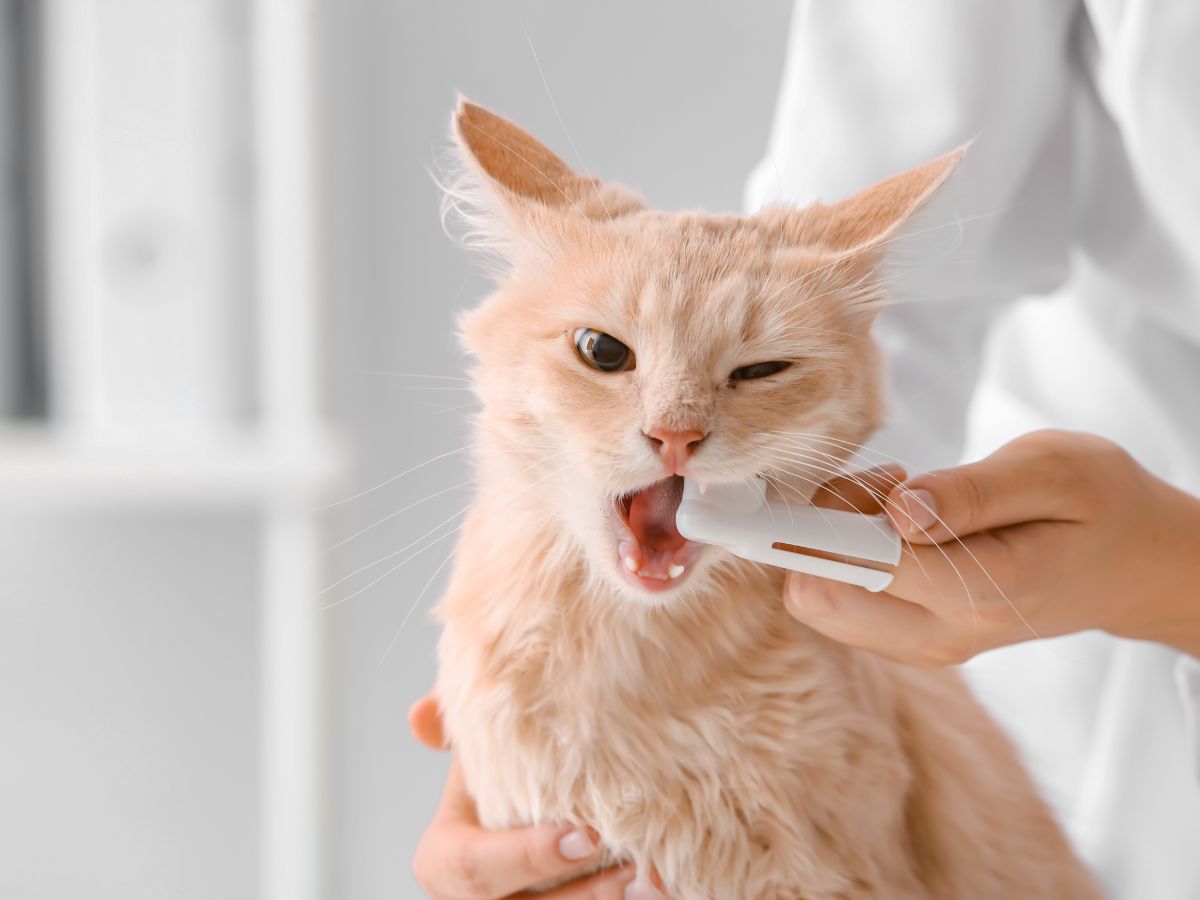
vet brushes the teeth of a cat

Why Dental Health Matters

Dental disease doesn’t just affect the mouth. Bacteria from untreated dental issues can enter the bloodstream and impact organs such as the heart, liver, and kidneys. Early diagnosis and treatment are essential to prevent more serious health complications.

Supporting Your Pet’s Dental Health

We’re here to help you maintain your pet’s oral health through regular exams, professional cleanings, and at-home care guidance. If you have concerns about your pet’s teeth or would like to schedule a dental assessment, our team is happy to help and guide you through the next steps.

Frequently Asked Questions About Pet Dental Care

Why do pets need to be under anesthesia for a dental cleaning?
Unlike humans, dogs and cats will not sit still with their mouths open while we use sharp ultrasonic scaling tools! General anesthesia is necessary to keep your pet safe, pain-free, and stress-free. It also allows us to place a breathing tube that protects their lungs from the bacteria being scaled off their teeth, and lets us safely clean deep beneath the gumline where 60% of dental disease hides.
Why are full-mouth dental X-rays necessary if my pet's teeth look clean?
Just looking at a pet’s teeth only tells us half the story. Most painful dental issues—including root rot, jaw bone loss, hidden abscesses, and resorptive lesions—happen entirely beneath the gumline where the naked eye cannot see. Full-mouth digital dental radiographs (X-rays) allow our team to see inside the tooth structure and jawbone to treat hidden sources of chronic pain.
How can I tell if my dog or cat is suffering from a painful tooth or dental disease?
Pets are very good at hiding pain. They will often continue to eat even with severe, throbbing dental infections. Instead of a loss of appetite, look for subtle signs like exceptionally foul breath, red or bleeding gums, dropping food while eating, chewing on only one side of their mouth, excessive drooling, or pawing at their muzzle and face.
What happens if my pet needs a tooth extraction?
If our dental X-rays reveal a tooth that is fractured, deeply infected, or structurally dead, extracting it is the best option to eliminate their chronic pain. We use localized nerve blocks (freezing) aimed at maximizing comfort during the extraction, and we send them home with tailored post-operative pain medications and a temporary soft-food diet plan for a smooth recovery.
How often should my pet get a professional dental cleaning?
For most dogs and cats, we recommend a professional dental evaluation and cleaning once a year starting around age three. However, smaller dog breeds and certain cat breeds are genetically prone to rapid tartar buildup and may benefit from a checkup every 6 months. Our Mississauga veterinary team will assess your pet’s mouth at every annual wellness visit to give you a personalized recommendation.