Pet Ultrasonography

At Erin Mills Pet Hospital, we offer on-site ultrasonography to help evaluate your pet’s internal health using noninvasive imaging. This diagnostic tool uses sound waves to assess organs and structures, helping us detect abnormalities, monitor conditions, and support accurate diagnoses with minimal discomfort for your pet.

Pet Ultrasonography in Mississauga, ON

Our hospital is equipped with an on-site ultrasound, allowing us to perform general diagnostic imaging as part of your pet’s care. In more complex cases, we also work with a visiting ultrasonographer to provide more advanced imaging when needed.

To ensure the best quality images and a comfortable experience, some pets may benefit from mild sedation or anxiolytics to help them remain calm during the procedure.

Understanding Ultrasonography at Erin Mills Pet Hospital

Ultrasonography, also known as ultrasound, is a safe and noninvasive imaging technique that allows us to examine internal organs such as the liver, kidneys, bladder, and more. It can help identify conditions like fluid buildup, cysts, tumors, or other abnormalities, and is also commonly used to monitor pregnancy.
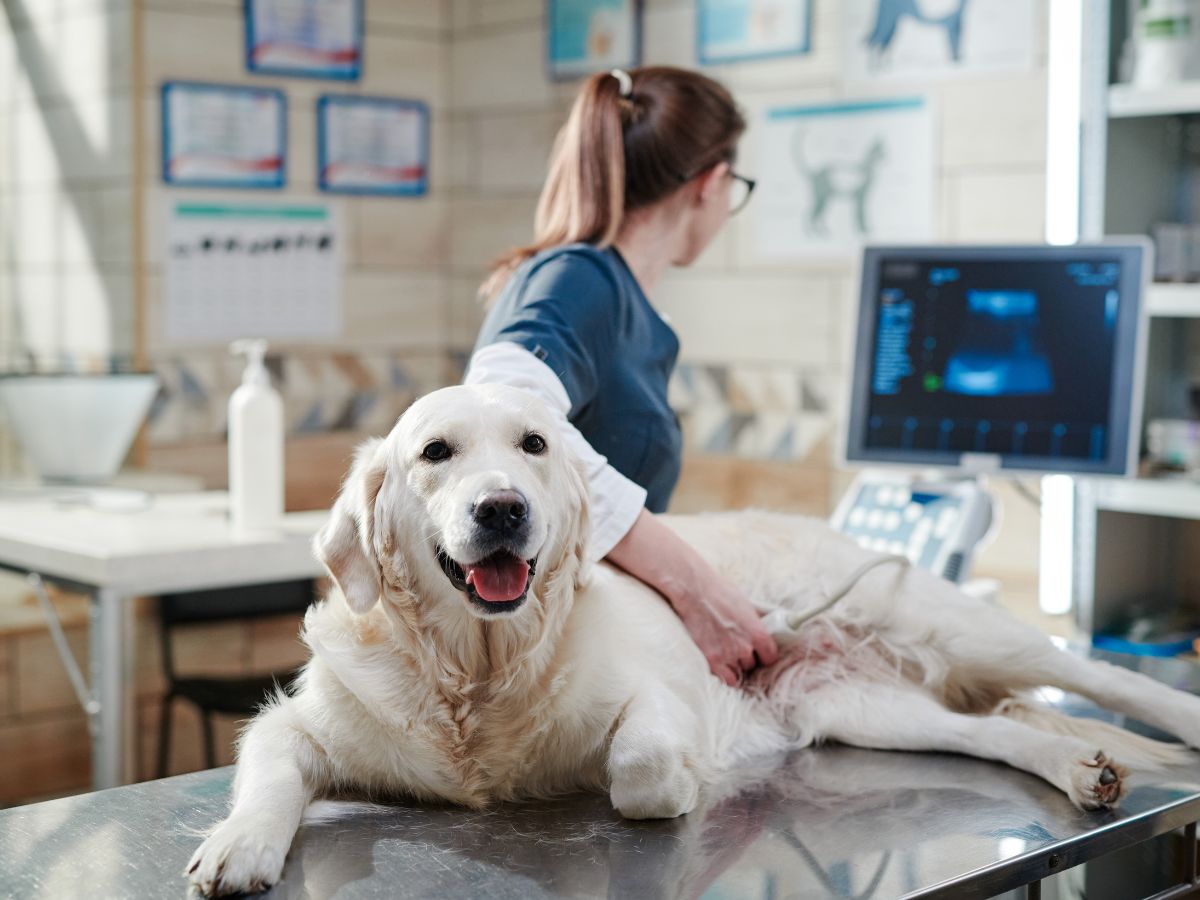
vet performing an ultrasound scan on dog

What to Expect

During the procedure, a small amount of gel is applied to your pet’s skin, and a probe is gently moved over the area being examined to capture images. The process is painless and does not involve radiation. Depending on your pet’s comfort level, we may recommend sedation or calming medications to help them stay still and reduce stress.

If you have any questions about whether an ultrasound is appropriate for your pet, our team is happy to guide you through the next steps.

Frequently Asked Questions About Pet Ultrasonography & Ultrasounds

Why does my pet need an ultrasound if they already had an X-ray?
X-rays are excellent for looking at bones and the general shape of major organs, but they cannot see inside them. An ultrasound uses high-frequency sound waves to see right through organ walls in real time. It allows our veterinarians to look inside the liver, kidneys, and spleen to check their internal architecture, evaluate moving structures like heart valves, and detect fluid, hidden cysts, or tumors that a flat X-ray can’t reveal.
Why do you have to shave my pet's fur before an ultrasound?
Ultrasound waves cannot travel through air pockets trapped in thick animal fur. For the ultrasound probe to send and receive clear sound wave echoes, it must make direct, seamless contact with the skin using a specialized transmission gel. Shaving a small patch of fur ensures we get the highest-quality, high-definition images necessary for an accurate diagnosis. The fur will grow back completely within a few weeks!
Does my pet need to have a full bladder for the ultrasound?
For general abdominal ultrasounds, a moderately full bladder is incredibly helpful. Fluid appears black on an ultrasound, which provides excellent contrast and allows the veterinarian to clearly evaluate the bladder wall lining, check for hidden bladder stones, or safely collect sterile urine samples if needed. Unless it is an emergency, try to prevent your pet from urinating right before their scheduled scan.
Why does my pet need to fast before an ultrasound appointment?
We recommend fasting your pet (usually for 8 to 12 hours beforehand) because active digestion creates significant gas inside the stomach and intestines. Ultrasound waves cannot pass through air or gas pockets, which can completely block our view of deeper surrounding organs like the adrenal glands, pancreas, and liver.
Is the ultrasound procedure painful or dangerous for my pet?
Not at all. Ultrasonography is completely non-invasive, painless, and carries zero risk. Unlike X-rays, it uses gentle acoustic sound waves rather than radiation, making it completely safe for all animals, including senior pets, critical patients, and pregnant dogs or cats. Your pet will simply lie comfortably on a padded cushion while the gel and probe are applied.
Why do some pets need sedation or anti-anxiety medication for an ultrasound?
While the scan doesn’t hurt, pets must lie completely still on their back or side for 20 to 45 minutes in a dimly lit room while the veterinarian meticulously measures their internal structures. If a dog or cat is highly energetic, stressed, or painful due to an abdominal issue, holding them still can be difficult. A mild sedative or anti-anxiety medication keeps them relaxed and happy, ensuring we capture precise, blur-free diagnostic images.
How long does it take to get the results of my pet's ultrasound?
Since the scan happens live on our digital monitors, your veterinarian will be able to share the initial diagnostic findings with you immediately following the procedure. For highly complex or subtle cases, we instantly package the digital video loops and images to send to a board-certified veterinary radiologist for an expert second-opinion review, with detailed reports usually arriving within 24 hours.